Eric Ndorere
Eric, a dedicated conservationist, was born and raised in the Nyanga community, adjacent to the Ishasha sector of Queen Elizabeth National Park (QENP). His passion for wildlife led him to enroll in the Hotel and Tourism Training Institute Jinja, where he earned a degree in Wildlife and Tourism Management.
After graduation, Eric took his first steps in the field by joining the Uganda Wildlife Authority as a park ranger in Mgahinga National Park. His commitment and skills soon earned him a transfer to Bwindi Impenetrable Forest National Park, where he spent two and a half years engaging in vital activities such as gorilla habituation, conducting a gorilla census, and guiding international tourists under the International Gorilla Conservation Program.
Eric’s expertise continued to grow, leading him to Marasa Africa in Murchison Falls National Park. There, he served as the group head guide and received specialized training in wildlife capture from the Giraffe Conservation Foundation. His experience has encompassed numerous capture and translocation efforts across various national parks, further enriching his understanding of wildlife conservation.
From 2012 to 2015, he took on the role of head guide at Premier Safaris, Ltd. However, his deep commitment to wildlife conservation inspired him to transition into a private safari guide, focusing on his passions and helping others connect with the natural world. He currently holds this position, where he continues to advocate for wildlife conservation while sharing his extensive knowledge with safari guests.
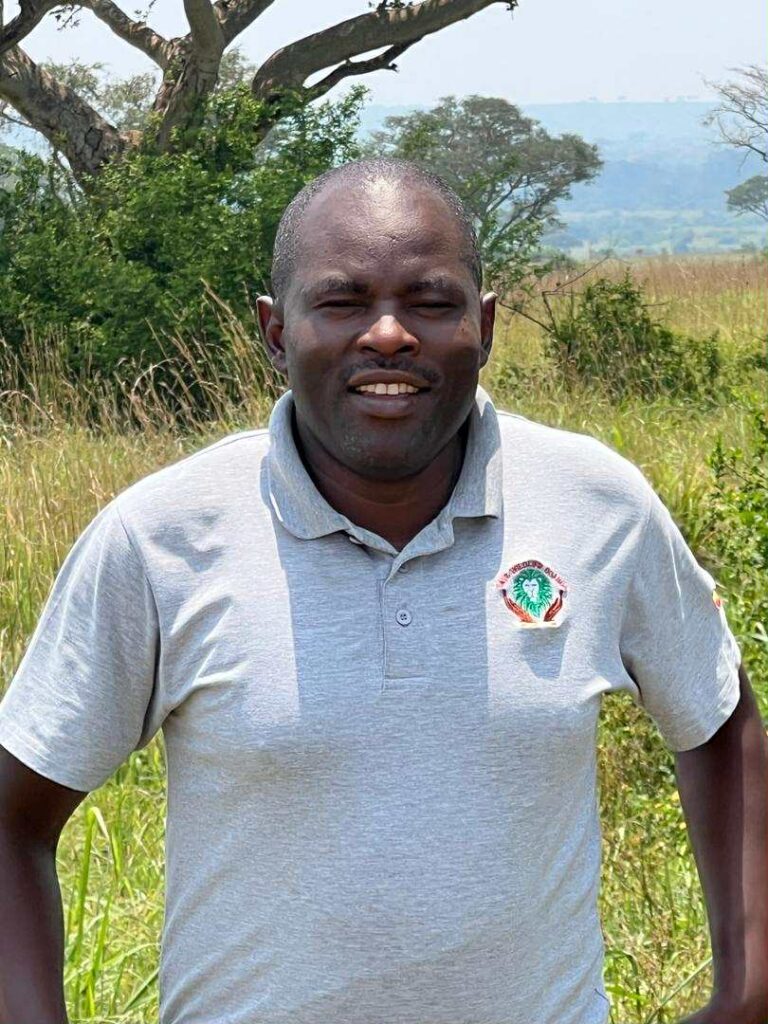
Richard Tumusiime
Richard was born and raised in Western Uganda, at the foot of the breathtaking Mountains of the Moon in Kabarole district. Growing up in a conservation zone, he lived harmoniously alongside the incredible wildlife of the region, which fostered in him a deep appreciation and enthusiasm for nature from a young age.
After completing his primary and secondary education, Richard pursued his passion further by enrolling at the College of African Wildlife Management in Mweka, Tanzania. Here, he successfully completed a variety of courses, earning diplomas in Wildlife Management and several related fields.
Richard’s professional journey began in 1995 as a guide for the Uganda Wildlife Authority. His dedicated work involved research and monitoring for data collection, chimpanzee habituation, hospitality, visitor handling, and contributions to projects like the Animal Censuring Project and the Jane Goodall Institute, among others.
In 2016, Richard transitioned into a role as a tourist driver-guide, allowing him to leverage his extensive experience in wildlife management along with his education in the hospitality industry. His commitment to wildlife conservation took on a new urgency in 2021 when he became increasingly concerned about the tragic poisoning of six tree-climbing lions in the region. This event spurred him to collaborate with Save Wildlife Uganda to engage and sensitize communities bordering the Ishasha sector of Queen Elizabeth National Park.
Stacey Sadelfeld